
Le Flambeau Foundation , Inc: This article, written by Professor Abdurahman Abadullahi (Baadiyow), is a tribute to Senator Emile Saint-Lot, a founding spirit of the Le Flambeau Foundation . Published in advance of his birthday on September 11th, it serves as a timely and ideal gift in celebration of his life.
History is more than a record of past events; it is a living thread that connects nations, peoples, and generations, often shaped by the courage and vision of exceptional individuals whose actions transcend time and borders. I was reminded of this in a strikingly personal way when I received an unexpected email from Jean St.Lot-Gervais the son of the former Haiti’s Ambassador to the United Nations, Emile Saint-Lot and later had the opportunity to talk to him. Jean had read Mohamed Trunji’s book: Somalia The Untold History 1941-1969 and my book, Somalia: A State in Search of Exceptional Leadership, in which I traced Somalia’s turbulent political journey and highlighted the decisive role of leadership in shaping its destiny, briefly noting the contribution of his father, whose diplomatic efforts at the UN intersected with Somalia’s struggles at a critical historical moment. Jean’s message as quoted was written as follow: “I recently finished reading your book, Somalia: A State in Search of Exceptional Leadership, and I want to extend my sincere compliments. Your book is exceptionally well written, and it helped clarify some missing pieces as I connect the narrative of my father, Ambassador Emile Saint-Lot, and his role in Somalia’s independence.” This message was more than a simple note of recognition; it brought history alive for me, showing that it does not live only in archives or scholarly texts but persists in the memories carried by families, preserved across generations, and reawakened through unexpected, deeply human connections.
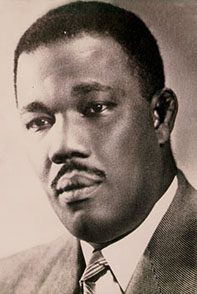
Senator Emile Saint-Lot was not only Haiti’s first ambassador to the United Nations after its establishment in 1945 but also a pioneering figure on the global stage, deeply involved in shaping the post-World War II international order. As a founding member of the UN, he stood alongside world leaders in crafting frameworks for peace, justice, and human dignity, and he became a signatory of the Universal Declaration of Human Rights, working in close collaboration with the chairwoman of the commission, Eleanor Roosevelt, the former First Lady of the United States, whose moral vision and advocacy for human rights helped guide the document’s historic creation. Saint-Lot’s participation in this defining moment underscored his enduring commitment to the principles of freedom, equality, and self-determination, and it situated Haiti, a small Caribbean nation, at the heart of a transformative global effort to codify the rights and liberties of all peoples.
The historical ties between Somalia and Haiti take root in the pivotal years of Somali advocacy for self-determination, when the Somali Youth League (SYL), determined to advance national unity and independence, sent its Secretary-General, Abdullahi Isse Mohamud, to New York in 1948 to lobby diplomats, UN officials, and other international stakeholders, raising awareness of Somalia’s political aspirations for independence and unity. Firm in its commitment to Somali independence, the SYL opposed any plan that would return Somalia to Italian rule, viewing such proposals as a betrayal of the will of its people and the betrayal of the principles for which the Universal Declaration of Human Rights stands for. At that time, a small but devoted community of roughly 120 Somalis in New York—including Abdulkadir Qurabe, Jama Aburas, Ismael Ahmed Anjeer, Haji Sitten Yusuf, and others—provided financial and logistical support, ensuring Abdullahi Isse could operate effectively far from home and maintain a visible Somali presence in international diplomacy.
In the spring of May 1949, the grand hall of the United Nations buzzed with anticipation. The fate of entire nations hung in the balance as delegates gathered to decide the future of Italy’s former colonies. At the center of the storm was the controversial Bevin–Sforza Plan, a deal struck behind closed doors between Britain’s Foreign Secretary, Ernest Bevin, and Italy’s Count Carlo Sforza. Their proposal promised to reshape the map of Africa—but also ignited fierce debate that would test the conscience of the international community. The Bevin–Sforza Plan proposed to restore Italy to the administration of Somalia, and to divide territories such as Libya and Eritrea, among the victorious Allied powers. The proposal immediately sparked opposition, particularly from African and Arab delegations and from Somalis themselves, who saw it as a betrayal of the principle of self-determination enshrined in the UN Charter. Returning authority to Italy—the very colonial power that had oppressed Somalis and allied with Nazi Germany during the Second World War—was widely viewed as unjust and politically retrograde. Yet despite this widespread criticism, the plan initially appeared likely to succeed, buoyed by strong support from most Western powers and the Latin American bloc, which sought to facilitate Italy’s post-war rehabilitation and the restoration of its former colonial influence.
Amid this charged debate, Haiti’s representative, Senator Emile Saint-Lot, cast a decisive vote that would alter the course of history, defying the prevailing policy of his own government. Breaking ranks with nearly all other Latin American states, which supported Italy’s return, Saint-Lot voted against the Bevin–Sforza Plan, and his dissent proved pivotal, tipping the balance toward the plan’s failure. In that moment, Haiti—a small Caribbean nation with no direct stake in the Horn of Africa—emerged as a moral voice defending African peoples’ right to determine their own destiny. Following his vote, Saint-Lot delivered a memorable declaration before the General Assembly on 18 May 1949, grounding his position in principle and historical solidarity: “Given the affinities with the African people, it was impossible for Haiti to support the draft resolution of the First Committee, which might have had nefarious consequences for those peoples” (UN Doc. A/PV, 219). His words carried the profound weight of Haiti’s legacy as the first Black republic born of a successful anti-colonial revolution, a nation intimately acquainted with the meaning of freedom, dignity, and resistance to domination.
Senator Emile Saint-Lot, Haiti’s former Ambassador to the UN, working closely with Abdullahi Isse, went beyond procedural advocacy to take a profound moral stand, demonstrating how the struggles of Black and African peoples were interconnected across continents. Their efforts successfully blocked the Bevin-Sforza Plan, which would have restored Italy’s direct colonial rule, resulting instead in Somalia being placed under a UN Trusteeship supervised by Egypt, the Philippines, and Colombia for ten years under Italian administration. Saint-Lot’s intervention reframed Somalia’s future, ensuring that Italy could not govern without international oversight, while signaling that even the conscience of a small state could influence global decisions, uphold self-determination, and affirm Haiti’s historic mission to stand with oppressed peoples. Through this combined local and international action, Somalia not only safeguarded its right to shape its own destiny but also laid the foundation for subsequent diplomatic recognition, national unity, and the assertion of sovereignty on the world stage.
Following independence, and most likely on the recommendation of Abdullahi Isse, Somalia’s Foreign Minister after the independence in 1960, Mr. Emile Saint-Lot was formally honored in 1961 by President Aden Abdulle Osman with the Order of the Somali Star, one of the nation’s most prestigious distinctions, in recognition of his steadfast support during this pivotal moment, cementing his legacy as a key ally in Somalia’s pursuit of sovereignty and national unity. The conferral was publicly announced and read aloud before the Somali National Assembly, a ceremony that celebrated not only Saint-Lot’s decisive vote at the United Nations against restoring Italian colonial authority but also the courage and principle that had guided his diplomatic efforts. Yet the acknowledgment went beyond ceremonial honor: Saint-Lot was subsequently the foreign minister Abdullahi Isse appointed him Legal Advisor for the Permanent Mission of Somalia to the United Nations in New York, a role in which he continued to champion Somali interests on the international stage, bridging continents through diplomacy and reinforcing the enduring partnership between Haiti and Somalia. This dual recognition—both symbolic and professional—served as a testament to how moral leadership and unwavering advocacy could forge lasting bonds between nations, leaving a legacy that resonated in ceremonial halls and diplomatic chambers alike, inspiring future generations to honor the power of principled action in shaping history.
The torch once lit by Ambassador Emile Saint-Lot at the United Nations did not fade with time; it blazed into the next generation, carried forth by his son, Jean St.Lot-Gervais. The torch lit by Ambassador Emile Saint-Lot at the United Nations did not fade with time; it was passed on to the next generation. His son, Jean St.Lot-Gervais, now carries that same flame. As president of the Le Flambeau Foundation , Jean upholds his father’s legacy by providing scholarships and educational opportunities for youth in Haiti. Through this work, he lights the way toward a just, proud, and sustainable future for a nation grounded in the core values of respect, principles, and discipline.
In Somalia, the story that bound its fight for independence to the distant shores of Haiti lay buried in silence—an untold chapter lost in the shadows of history. Then, in the quiet sanctuaries of scholarship, a figure emerged: Avv. Mohamed Trunji, a historian with the patience of an archivist and the fire of a storyteller. With each page he turned, each fragment he uncovered, the past began to stir. Before him unfolded the life of Ambassador Emile Saint-Lot, the Haitian diplomat who, with a solitary yet unyielding voice at the United Nations, had stood between Somalia and the threat of recolonization. Trunji did not merely document this revelation—he resurrected it. On 12 March 2021, through a riveting article in Hiiraan Online, he unveiled the drama of a forgotten alliance, where Somali activists and global allies converged in a struggle for sovereignty. It was as if a spotlight had cut through decades of darkness, illuminating a stage where courage, principle, and cross-continental solidarity had once intertwined. In that moment of rediscovery, the forgotten became unforgettable, and the legacy of Saint-Lot’s stand was restored as a living force in Somalia’s national memory.
Prof. Abdurahman Abadullahi ( Baadiyow)